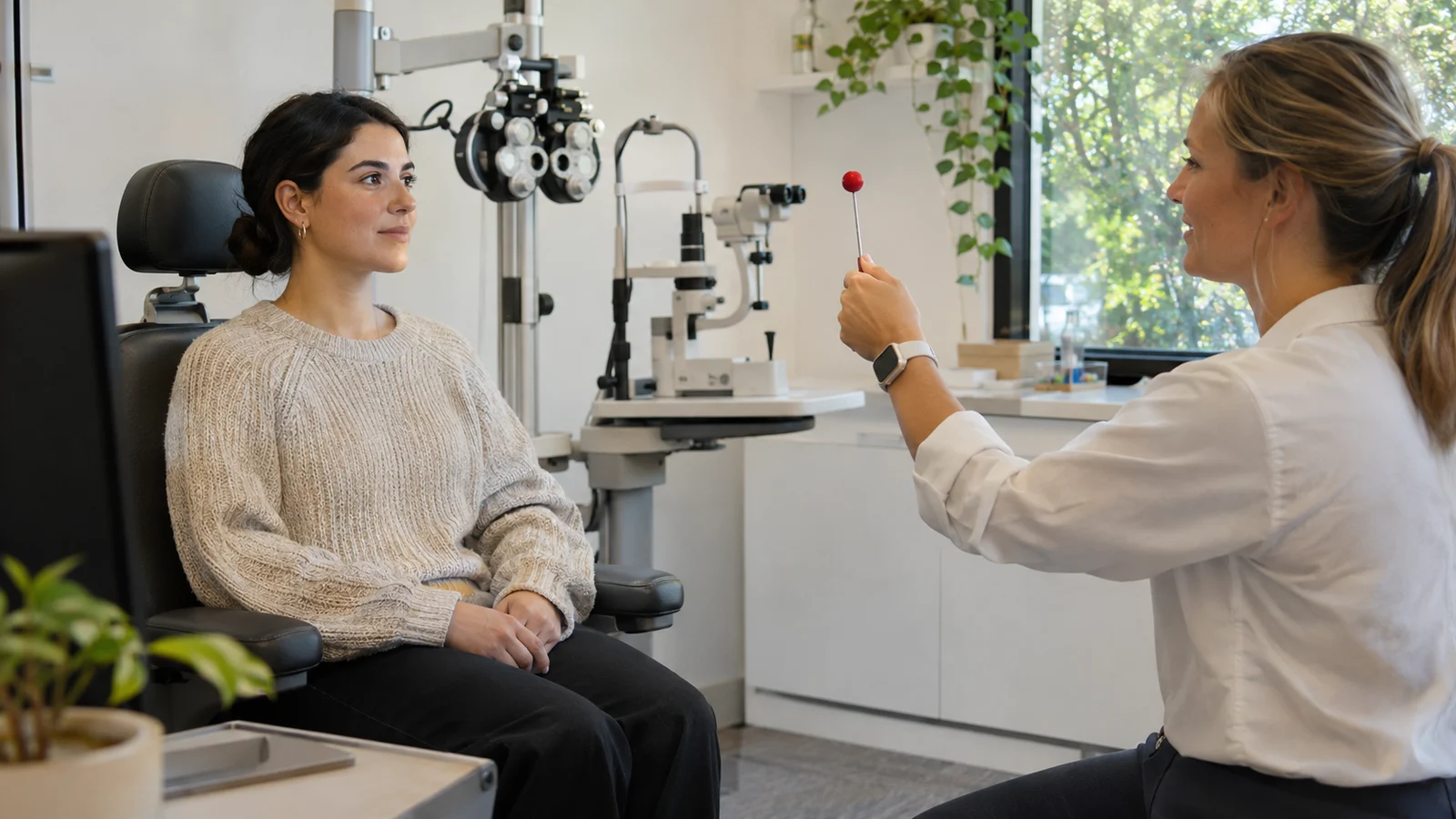
Clear sight depends on light being focused on the retina and on the brain interpreting the resulting signals. In common refractive errors such as short-sightedness, the shape of the eye affects where light focuses. Moving the eyes or repeatedly changing gaze does not reliably alter that shape or replace the correction provided by prescribed glasses or contact lenses.
Imagine someone finds distant road signs blurry after a long afternoon reading. Looking across the room for a while may give their eyes a break from close work, but it cannot establish why the signs are unclear. If the blur persists or recurs, an optometrist can assess vision and check whether a prescription or another explanation needs attention.