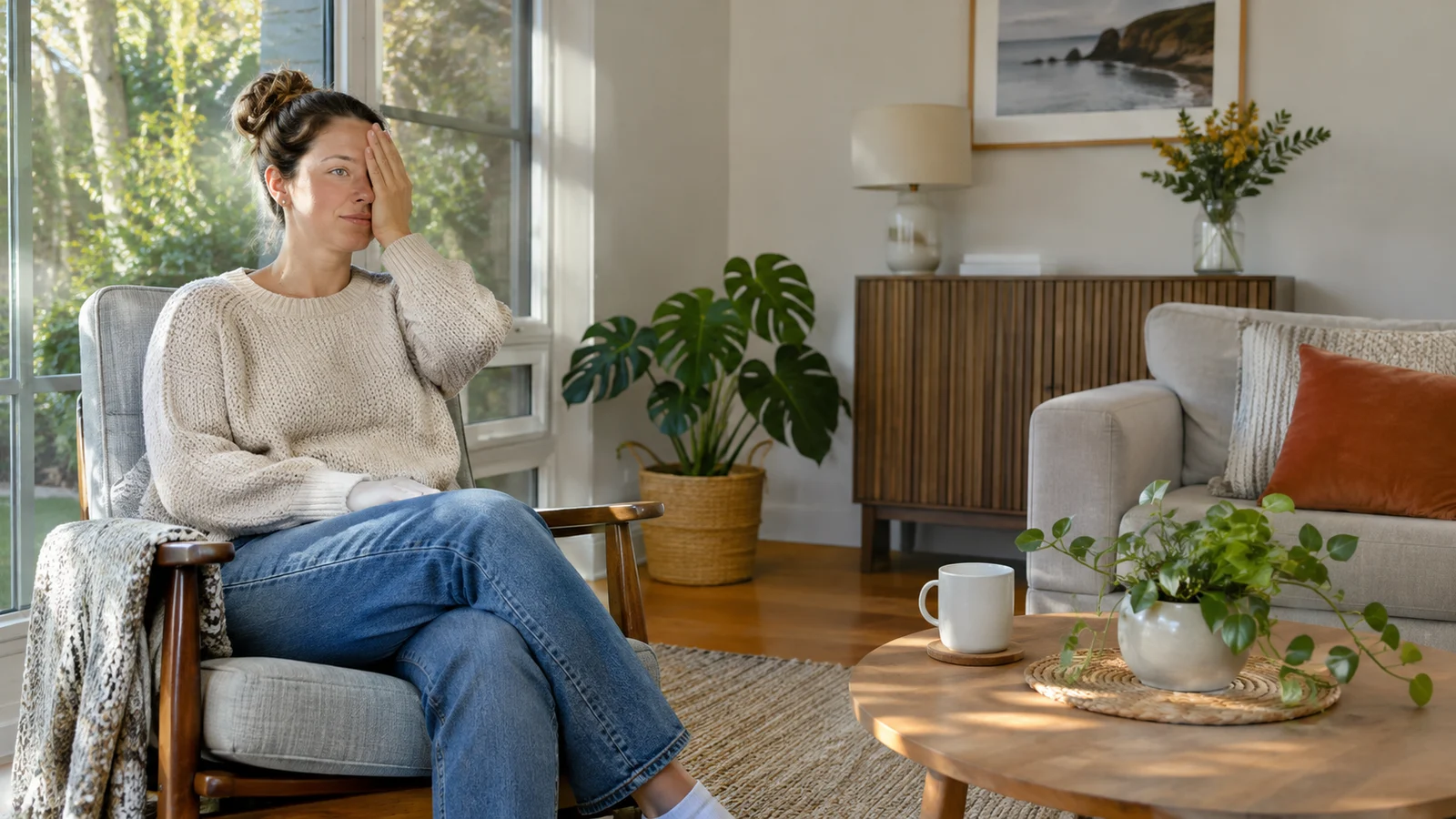
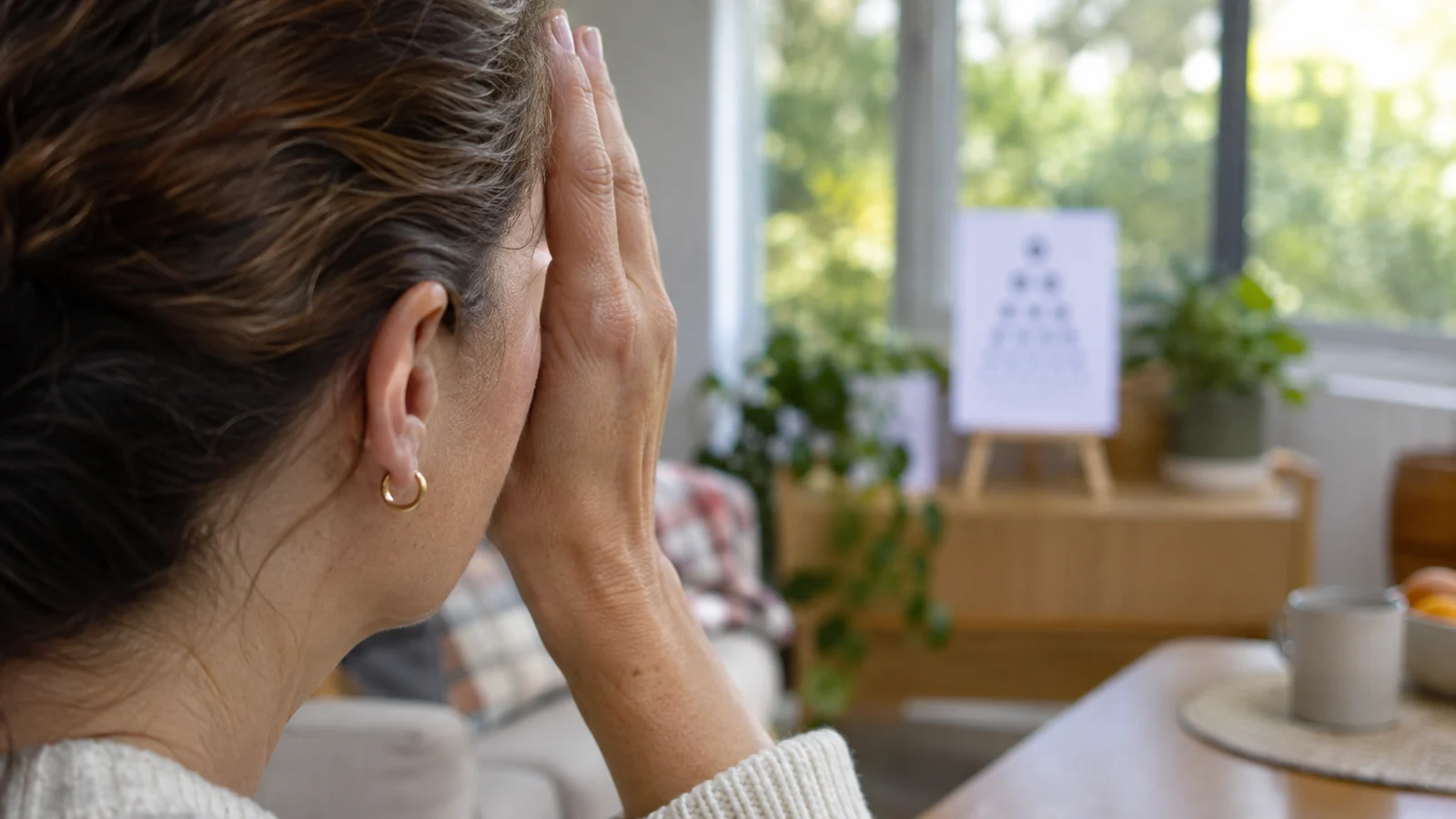
A home check is an observation under everyday conditions, not a diagnosis. Lighting, distance, screen size and whether you are wearing your usual glasses can all change what you see. Comparing each eye separately may help you describe a difference, but it cannot identify its cause or measure eye health.
For example, someone who notices that print seems less clear could cover one eye without pressing on it, then compare the other while looking at the same text in the same light. If they normally wear glasses for that task, noting whether they wore them during the comparison gives an optometrist useful context.
Home observations have limits. An eye may see a letter clearly while another aspect of vision or eye health needs attention, and a small change can be hard to judge without consistent conditions. Repeating an informal check should not delay arranging an examination for a persistent or worrying change.
Sudden vision loss, a sudden increase in flashes or floaters, a dark curtain across vision, or severe eye pain calls for urgent medical assessment. For a gradual change, record what you noticed and arrange an eye examination. The practical value of a home check is a clearer description of a problem, not reassurance that everything is healthy.